
Understanding Commerce: The Backbone of Global Economy 2026
Understanding Commerce: The Backbone of Global Economy 2026
Introduction
Commerce is the foundation of economic development and a key factor in determining the character of societies, innovation, and international relations. It includes all the activities related to the trade of goods and services and makes it possible to move commodities, capital, and information between people, companies, and countries To comprehend the commerce is to understand the economic growth, market operation, and global positioning of nations.
Defining Commerce
Commerce in its most basic sense is the overall trade and exchange process, and it includes all activities which make the transfer of goods and services from manufacturers to final users possible.
It covers a variety of functions such as purchasing, selling, carrying, storing, banking, insuring, advertising, and performing legal activities.
One of the key differences between commerce and trade is that while trade is the actual buying and selling, the term commerce refers to a larger area that includes all supporting activities of trade.
Historical Evolution of Commerce
The history of trade can be traced back to ancient nations like Mesopotamia, Egypt, India, China, and Greece.
Barter was the main method of commercial transactions at the beginning, which meant that the swapping of goods was done directly.
The introduction of money made commerce a more organized and efficient system, which eventually led to the establishment of markets, merchants, and trade routes like the Silk Road.
In the Middle Ages, commerce was boosted by the rise of, on the one hand, the merchant guilds and, on the other hand, the creation of trade fairs.
The banking system and financial institutions that supported extensive trade were the results of the Renaissance. The Industrial Revolution was a defining moment when the entire commerce sector was turned upside down by mass production, technological innovations and transportation advancements.
Today, the use of digital technology and the phenomenon of globalization have literally changed the face of commerce, making it an instantaneous and very well-connected process across the entire world.
Types of Commerce
Commerce, in general, may be classified into two main groups:

Domestic Commerce: This pertains to trade that takes place within a particular country. It encompasses retail, wholesale, and all other ways of business dealings that happen within the limits of a certain nation.
Domestic commerce plays a crucial part in the economies of the land, creating job opportunities and encouraging the growth of the area.
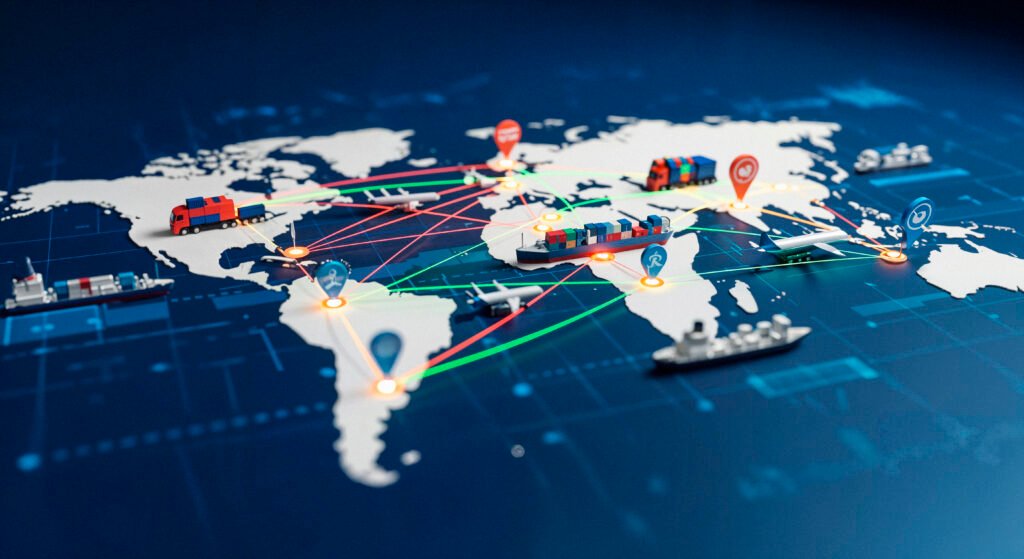
International Commerce: This is another term for foreign trade, and it encompasses the interchange of goods and services among nations. International commerce is one factor of comparative advantage, resource availability, and consumer preferences among the driving factors. It supports the diversion of economic power, the swapping of cultures, and the establishment of diplomatic connections.
Different Types of Commerce: Top 10 Explained Simply
1. Business to Consumer (B2C)
B2C commerce means that a business sells its products or services directly to consumers. The vast majority of businesses that sell via the Internet and traditional retail stores fall under this heading.
Many examples of B2C can be found in the area of online shopping. For example, you might purchase items like clothing from an e-store or subscribe to a service such as Netflix.
The primary focus of the B2C model is to promote marketing efforts, increase customer experience, and provide customers with the opportunity to compare prices in a competitive environment.
2. Business to Business (B2B)
B2B commerce involves a company selling to another company. Generally speaking, B2B sales will be of higher volume, for a longer duration and with less frequent sales than B2C sales.
Companies provide tools to businesses through their software or manufacturing businesses, supplying them with the materials needed for production.
Some fundamental focuses of B2B transactions are building strong business relationships, entering into contractual agreements and demonstrating operational efficiency.
3. Consumer to Consumer (C2C)
C2C transactions are defined as consumer to consumer commerce. That is, consumers sell their items or services to one another using an online marketplace or platform.
Examples of C2C include online marketplaces where you can purchase used products or purchase from an artisan who creates items by hand.
The rapid growth of the C2C category has been driven by advancements in technology that enable low-cost and secure transactions between users.
4. Consumer to Business (C2B)
C2B commerce is a unique transactional model that allows individuals to offer their products or services to businesses. Individuals provide businesses with their own unique skills or talents, such as designing graphics or developing social media content, and can determine the price for their service and establish the terms of their engagement.
The primary advantage of this model is that businesses can utilize the creativity of individuals and build their brand through innovative methods flexible talent and ideas.
5. Business to Government (B2G)
B2G: Business-to-Government (B2G) commerce is the relationship between businesses and government agencies where businesses sell their products or services to a government agency.
These transactions usually occur through formal bidding or tender processes.
Some examples of B2G commerce include construction companies that build public infrastructure (e.g., roads, bridges) and IT companies that provide software solutions to government departments.
In B2G commerce, there is a very high level of compliance and quality assurance within the tendering process. Therefore, B2G commerce focuses on ensuring compliance, high levels of quality, and the transparency of the process.
6. Government to Business (G2B)
G2B: Government-to-Business (G2B) commerce refers to the services/support that are provided by the government to businesses. Examples of G2B commerce include: business licence applications, tax services offered by the government, and public procurement information.
G2B commerce aims to assist businesses in operating legally and efficiently while promoting economic prosperity.
7. Government to Consumer (G2C)
G2C: Government-to-Citizen (G2C) commerce occurs when the government delivers goods/services directly to the citizen.
Examples include online tax payments and utility services (e.g., gas, electricity), and healthcare/public registration.
The rise of digital platforms has allowed the Government to deliver services more efficiently and transparently, making it easier for the average citizen to access these services.
8. Business to Business to Consumer (B2B2C)
A B2B2C model is one type of e-commerce (business-to-consumer) where an e-commerce site sells to the consumer via a second e-commerce site (the retailer).
An example of this would be when a software vendor sells its product through a third-party retailer or when a restaurant uses a delivery platform (like Uber Eats) to sell to its customers.
This allows businesses to have an additional retail channel while still maintaining their ability to grow sales profitably and quickly without having to manage customer relationships directly.
9. Mobile Commerce (M-Commerce)
M-commerce (mobile commerce) is purchasing and selling goods or services through mobile devices, such as tablets or smartphones. M-commerce encompasses several types of applications that make it possible for consumers to purchase from their smartphones, as well as mobile banking and different digital wallets.
M-commerce has grown tremendously in popularity over the past few years due to its convenience and speed compared to other channels.
10. Social Commerce
Social commerce is selling product directly through social media platforms. Businesses create and utilize social media networks to market the products they sell and also interact with their customer base and provide them the ability to purchase goods directly from within the social media platforms (e-commerce via social media).
Using social commerce is very effective for modern marketing as it combines social interaction with online shopping.
Components of Commerce
Commerce is made up of a number of closely related parts:
Trade: The primary action that consists of buying and selling goods and services.
Transportation: The transfer of products from the maker to the buyer, which can use various means like shipping, rail, and air transport.
Banking & Finance: The supply of money and the financial services that allow for trade to take place.
Insurance: The covering of goods and transactions from risks.
Advertising & Marketing: The activity of making consumer products and services visible and thus attracting buyers.
Legal Frameworks: The set of laws and regulations that control trade, contracts, and the protection of innovations.
Warehousing: The practice of storing goods in order to secure a consistent supply.
The Role of Technology in Modern Commerce
Commerce has been radically altered by technology in ways that had never been imagined before. The internet’s emergence has led to the development of e-commerce, where consumers from different countries can effortlessly buy and sell products online.
In addition, financial transactions have become easier due to digital payment methods, mobile banking, and cryptocurrencies.
Besides, data analytics and machine learning are now the driving forces behind the companies’ ability to monitor the changes in customer preferences, create targeted advertising, and manage their supply chains more effectively.
The use of blockchain technology, along with its other benefits, has made it more secure and trustworthy in the case of transactions, particularly those involving multiple nations.
E-commerce: The Digital Revolution
E-commerce has been the most remarkable development of the last few decades. It includes not only online retail but also electronic shopping centers and digital services.
In a way, e-commerce, with its enormous selection of products, low prices, and pleasant shopping environments, has reshaped the retail sector.
The e-commerce sector has several pros:
- Accessibility: Shoppers have round-the-clock access to stores and can shop from any corner of the earth.
- Variety: Consumers can buy products from global suppliers given a multitude of options.
- Price Comparison: It is now simpler to check different prices and score the best deals.
- Personalization: Customers get individualized suggestions according to their browsing and purchase history.
- Cost Efficiency: Decreased operational costs for merchants will ensue, which will cause prices to be lower than the competition.
On the other hand, e-commerce poses certain problems such as cybersecurity threats, convoluted logistics, and the debates around the legal aspects of data privacy and cross-border transactions.
Globalization and Its Impact on Commerce
The process of globalization has linked nations’ economies in such a way that the trading of goods, services, capital, and labor has no restrictions at all. This phenomenon has granted businesses the privilege of having a larger market to sell their products and consumers the opportunity to pick from more options. Moreover, it has also given birth to large corporations that operate in different countries, taking advantage of the interconnected supply networks to reduce their costs.
On the positive side, the globalizing world has been a major factor contributing to the economic growth and poverty reduction in a number of places; however, on the downside, it has opened up a host of issues regarding the environment, cultural values and income distribution. It is still very challenging for governments to find a way of keeping both sides of globalization in balance.
Legal and Ethical Aspects of Commerce
Commerce is heavily ruled by a complicated network of laws and regulations aimed at making sure fair practices are applied, consumers are protected, and competition is healthy. Among these laws are contract laws, trade regulations, intellectual property rights, and consumer protection laws.
The substance of commerce ethics is honesty, communication, appropriate treatment of workers, and care for the environment. Corporate social responsibility (CSR) has become a key issue, putting pressure on companies to be eco-friendly and ethical in their operations.
Challenges Facing Modern Commerce
Commerce has a lot of advantages, but at the same time, it also has to deal with a number of difficulties:
Economic Fluctuations: Confident buyers and reliable suppliers can both be hard to find during times of recession and economic crisis.
Technological Disruptions: Being in constant adjustment for the rapid changes in technology will be a very big issue.
Cybersecurity Threats: A lot of digital transactions provide a large ground for hackers to operate.
Trade Barriers: To a large extent, tariffs, sanctions, and various regulations can stall the movement of goods across borders.
Environmental Concerns: The planet is bearing the brunt of humanity’s insatiable appetite with the waste posing a major challenge to the environment.
Global Pandemics: Crises in health like COVID-19 have demonstrated that health crises can have very negative effects on commerce by way of disrupting supply chains and reducing consumer activity.
Future of Commerce
The future of commerce will be determined by technological advancements as well as sustainable undertakings. The major trends are:
- Digital Transformation: Uninterrupted use of AI, blockchain, and IoT technologies.
- Sustainable Commerce: Priority is given to eco-friendly products, the circular economy, and ethical sourcing.
- Personalization: Customer experience improved through data-driven insights.
- Decentralized Finance (DeFi): Increase in blockchain-based financial services.
- Omnichannel Retail: Smooth fusion of online and offline shopping experiences.
- Global Collaboration: Building up of international trade agreements and standards.
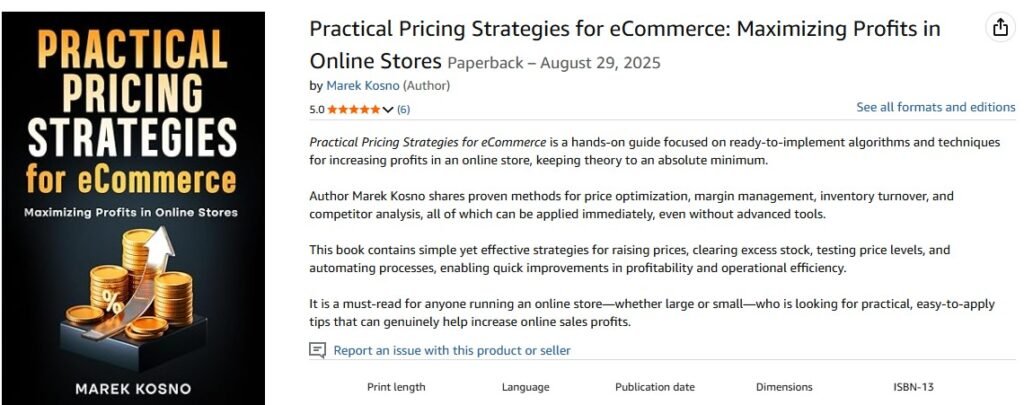
Practical Pricing Strategies for eCommerce: Maximizing Profits in Online Stores
click the here to purchase the book
Conclusion
Commerce, a field that is constantly changing, mirrors the intricacies and vigor of human civilization. Despite being transformed to various forms like barter in the early days and digital marketplaces today, commerce has been and will still be a major factor in economic development, cultural exchange, and social progress. World innovation and challenges brought forth will surely put the principles of fair, ethical, and sustainable commerce at the forefront of global prosperity and equity.