
Emerging Trends in Technology Shaping the Future 2025
Emerging Trends in Technology Shaping the Future 2025
The advancements in Technology are happening very fast and have made fundamental changes in how businesses operate, how we communicate, and how we interact with each other. Emerging Technology (ET) has become a trend with real life implications for the way we’ve lived our daily lives.
Emerging technology trends for 2025, along with the impact they will have on individuals, organisations, and the broader economy, are outlined in this article.
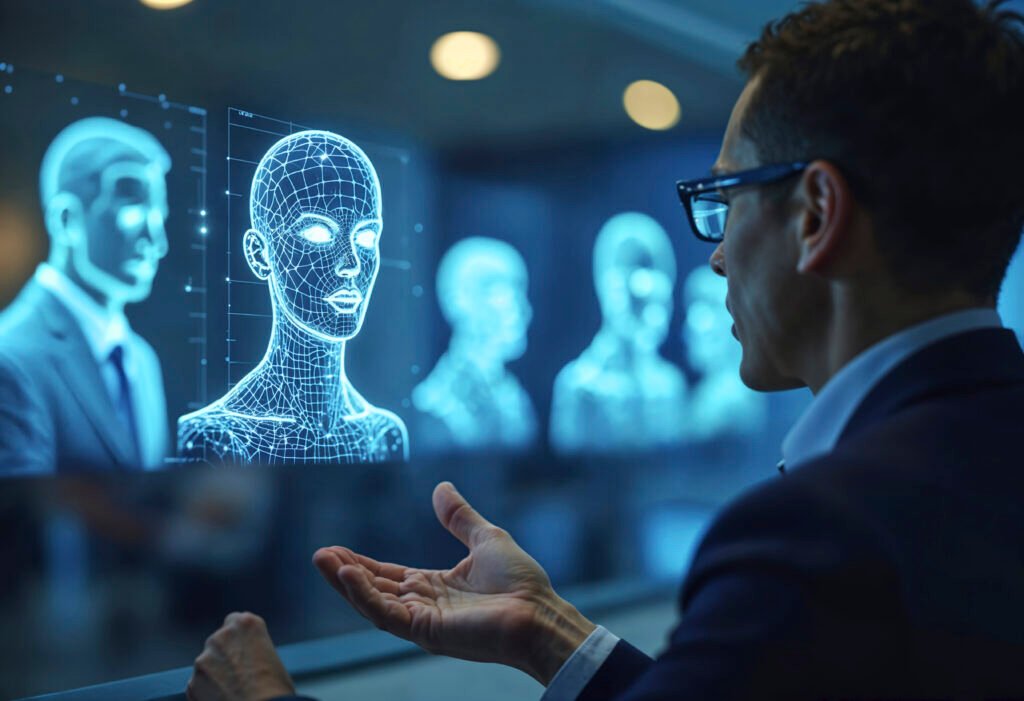
1. Artificial Intelligence Becomes More Human-Centric
Artificial Intelligence Becomes More Human-Centric
Artificial Intelligence, or AI, is becoming much more human-centric in 2025, moving away from simply automating a business process to being used as a collaborative tool between people and AI for creative endeavours and assisting with decision making.
Key Technological Developments:
- Generative AI technology that allows for automatic generation of content (i.e. Articles, Marketing Material, eBooks, etc.) through the combination of data analysis and natural language processing.
- Co-pilots or IntelliJoins embedded within software products, web browsers and computer operating systems that assist users in the completion of their tasks via predictive and contextual capabilities.
- Emotional and contextual Awareness or perceptiveness between AI systems and their users, allowing them to be personalised to the individual’s needs and preferences.
The implementation of AI enables businesses to better understand and cater to their customers’ needs, provide insight into future market trends, and optimise operational processes. In the healthcare sector, AI is helping physicians in their diagnostic and treatment planning processes. In the area of education, adaptive learning platforms utilize AI technology to tailor lessons and coursework to the student’s individual learning needs.
Instead of replacing people with machine intelligence, in 2025, AI is enabling individuals to be more productive and utilize the extra time they have gained through automation for more creative endeavors and completing tasks of higher value.
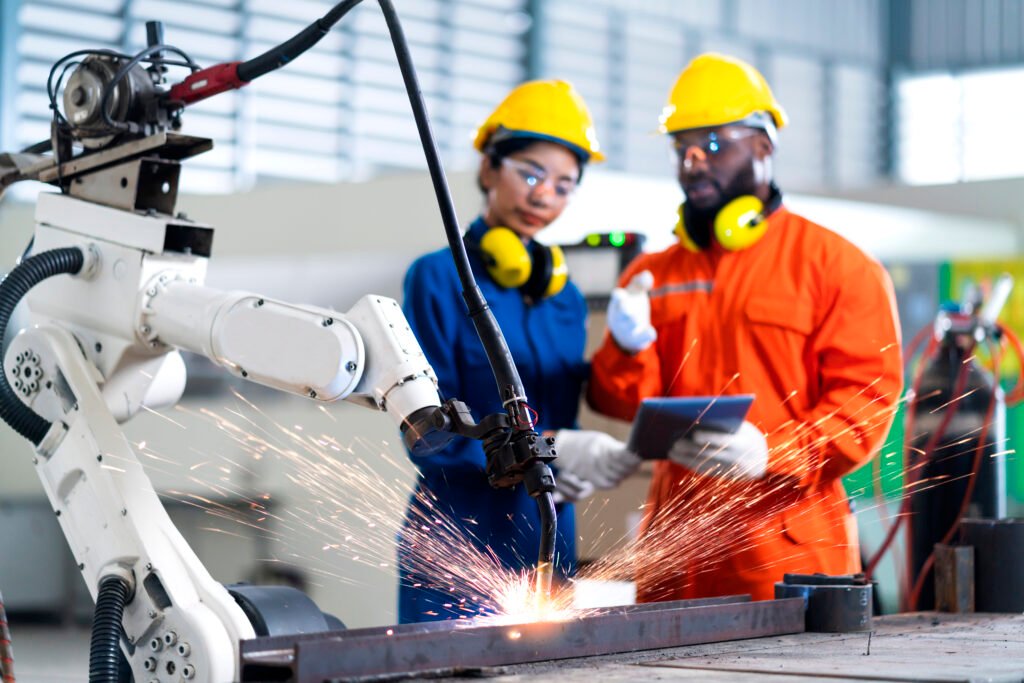
2. Automation and Robotics Expand Across Industries
Automation and Robotics Expand Across Industries
AI and robotics are accelerating the changes to business operations that began during the 1990s, and many industries have already begun using Automation in 2025. Automation will have a significant impact on a wide variety of industries before the end of this decade including logistics, healthcare, agriculture, retail, and even creative industries such as music, writing and film production.
Major Applications:
- Examples of Automation:
- Deliveries using autonomous vehicles and drones
- Using Robotic Process Automation (RPA) for administrative support in finance and administration
- Using Intelligent Robots in warehouses and hospitals
As robots continue to evolve, they will become more affordable, flexible, and intelligent, providing businesses with the ability to safely use robots alongside their human workforce, increasing efficiency and decreasing repetitive tasks that take away from employees’ ability to focus on strategic or creative work.
3. The Rise of the Metaverse and Immersive Experiences

The Rise of the Metaverse and Immersive Experiences
The Metaverse is in the process of emerging into a digital ecosystem from a trendy way to a real-world marketplace. In 2025 companies will have adopted immersive technologies like (VR) virtual reality, (AR) augmented reality, and (MR) mixed reality as part of a business model.
Key Use Cases:
- Factors of Immersive Technology:
- Virtual offices and collaborating remotely
- Creating training and simulated environments through immersive Technologies
- Purchasing through Virtual Retailers and buying virtual properties
- Using the internet to create online classes and events
Companies will invest in creating immersive technology platforms to attract and keep customers engaged and train employees better as hardware becomes cheaper in the coming years, software continues to become more complicated, and as more people become accustomed to using immersive technologies in their daily lives.
4. Web3 and Blockchain Technology Mature

Web3 and Blockchain Technology Mature
Blockchain and Web3 technologies are moving from speculation to actualisation and by the year 2025 will completely change the way individuals can manage their data, identity and value on the internet.
Key Trends:
- Decentralized Finance – DeFi (Platforms)
- 2) Digital Identity & Data Ownership
- 5) Smart Contracts (Automation & Transparency)
- 6) Tokenized Assets
Many companies are turning to Blockchain for safe and secure transactions through enhanced supply-chain visibility, as well as a means of preventing fraud with no intermediaries. Users now have complete accountability for their data thanks to the proliferation of Web3’s ecosystem and platforms providing freedom from centralised intermediaries.
5. Cybersecurity Becomes More Proactive and AI-Driven

Cybersecurity Becomes More Proactive and AI-Driven
Cybercriminal behaviour has become much more sophisticated over the last several years and in 2025 Cybersecurity has now shifted from a reactive and defence methodology toward proactive and predictive protection.
Emerging Cybersecurity Trends:
- Artificial Intelligence & Threat Detection
- Zero Trust Model (Security)
- Biometric and Passwordless Authentication
- Security Optimisation in Clouds
Data privacy and Digital Trust are top priorities for companies in the 21st Century, while private & public sectors continue investing heavily into Cybersecurity infrastructure to protect Critical Infrastructure, Finance and Personal Information.
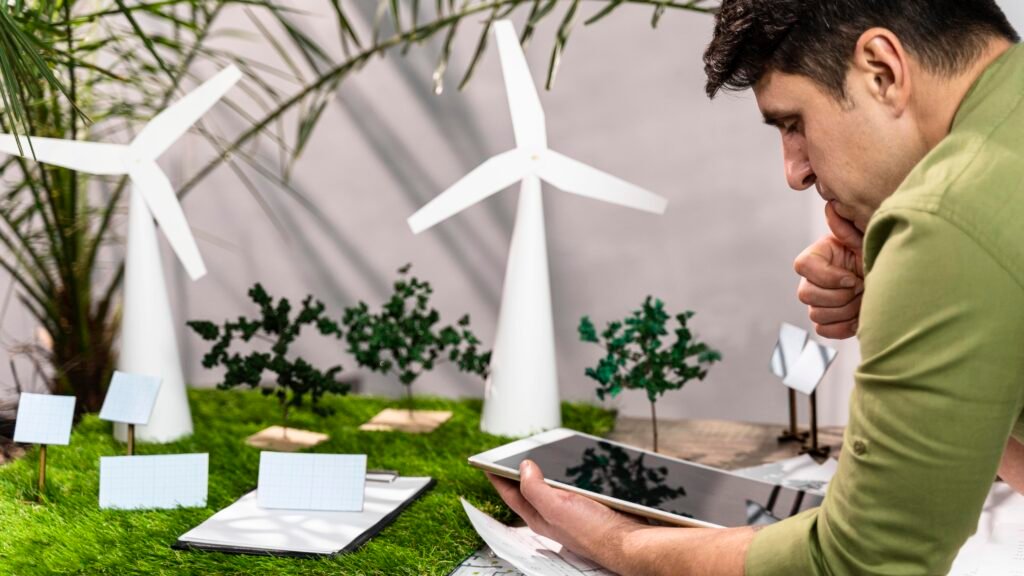
6. Sustainable and Green Technology Gains Momentum
Sustainable and Green Technology Gains Momentum
Sustainability is now a requirement; it cannot be ignored. Green technology is changing the way the world works in 3 industries: energy, transportation, & manufacturing—by 2025.
Key Areas of Growth:
- The use of renewable energy technologies such as solar, wind and hydrogen
- Smart grid technology and energy storage solutions
- The development of electric and autonomous vehicles
- Carbon capture technology and climate tech
Many technology companies are working toward minimizing their carbon footprint, maximizing their resource consumption, and supporting climate objectives. Sustainable technology will be a key source of competitive advantage for technological companies and a significant contributor to their long-term success.
7. The Expansion of 5G and Early 6G Development
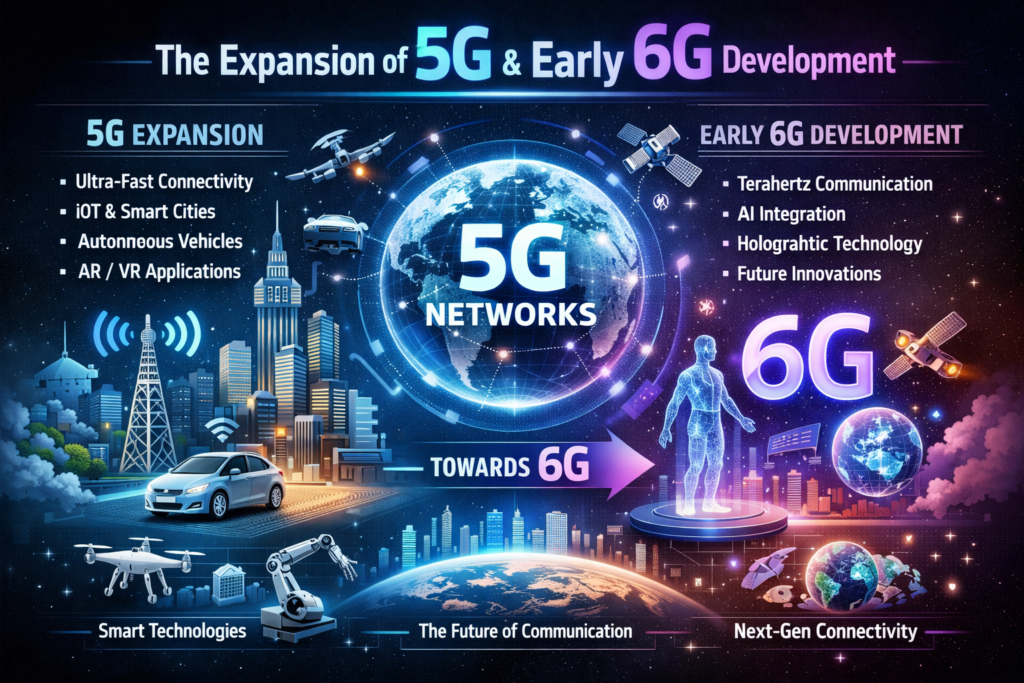
The Expansion of 5G and Early 6G Development
5G technology has reached maturity by 2025 and will provide users with higher speeds, decreased latency and increased connectivity to other devices. Additionally, the first 6G systems will be under development, paving the way for future enhancements.
Impact of Advanced Connectivity:
- The development of Smart Cities and IoT (Internet of Things) applications
- Improved Real-time Processing of Big Data
- Greater Immersive Experiences with Augmented Reality and Virtual Reality
- The operation of Self-driving Vehicles and Smart Facilities
Without high speed connectivity, digital transformation cannot happen seamlessly. Therefore, having devices, systems and people connected will facilitate seamless communication.
8. Internet of Things (IoT) Becomes Smarter
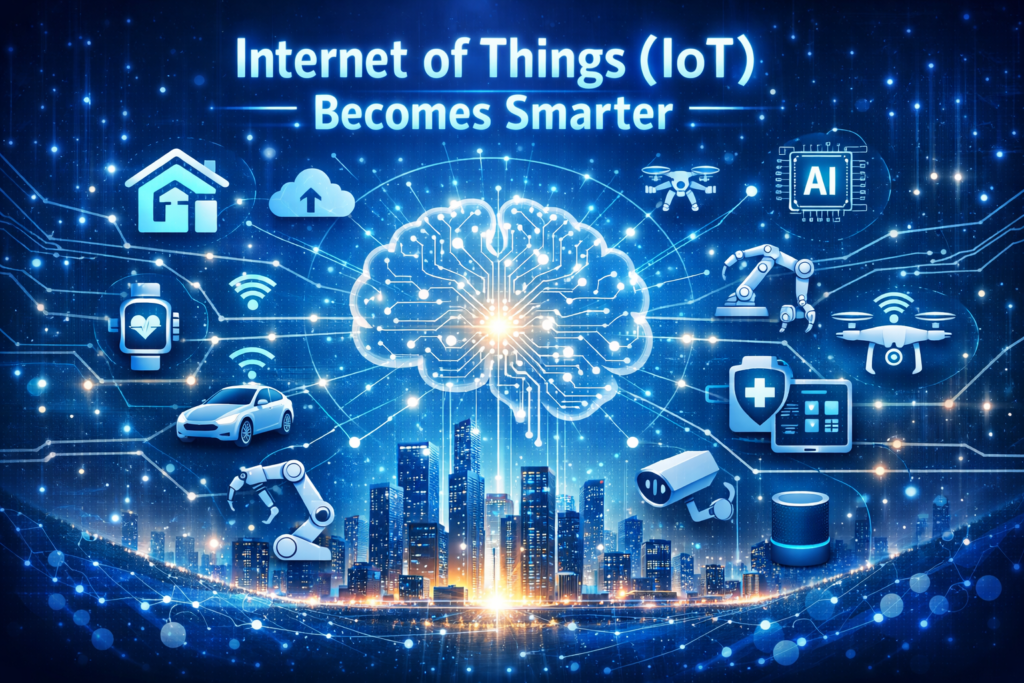
Internet of Things (IoT) Becomes Smarter
The IoT has been connecting billions of devices throughout the world and will continue its growth in the years ahead. In 2025, IoT solutions will be smarter, more secure and provide improved efficiency.
Common Applications:
- Homes and Wearable Technology
- Industrial IoT for Predictive Maintenance
- Agri-Tech with Smart Agriculture & Supply Chain Tracking
- Devices Used for Healthcare Monitoring
Use of AI in an IoT environment will provide real-time decision-making and allow for automation, thereby increasing efficiency while lowering the overall cost of operation for multiple industries.
9. Low-Code and No-Code Development Goes Mainstream

Low-Code and No-Code Development Goes Mainstream
Low-Code and No-Code platforms have revolutionized the way that software is developed by allowing the non-technical user to build software applications. In 2025, most businesses will use these platforms to quickly develop and deploy cost-effective software applications.
Benefits:
- Faster Development Cycles
- Reduced Need for Developers
- Foster Innovation Across Teams
- Cost Savings for Businesses
The democratization of tech has also enabled businesses to be more flexible when it comes to adapting to changing market demands.
10. Digital Health and Biotechnology Innovation
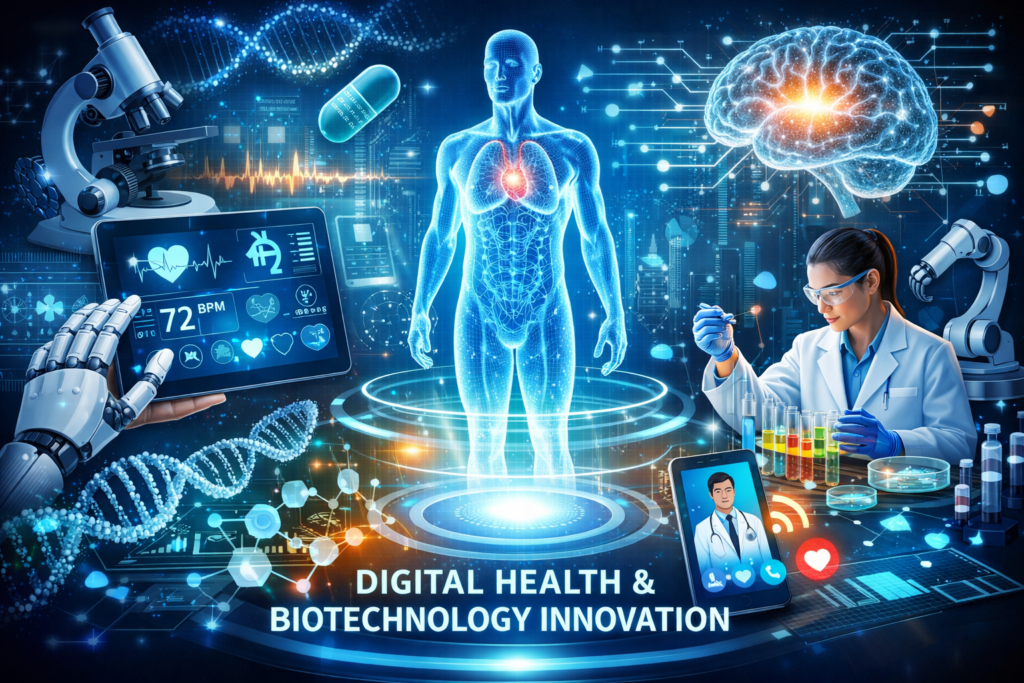
Digital Health and Biotechnology Innovation
Healthcare is changing due to technology. In 2025, with digital health tools and biotech innovation, patients will have access to improved outcomes.
Key Trends:
- Telehealth and Remote Care
- Artificial Intelligence for Diagnostic Testing
- Wearable Health Monitors
- Genomic and Personal Medicine.
All of these technologies create a more proactive, data-driven, and patient-centred health care system.
11. The Future of Work and Remote Collaboration
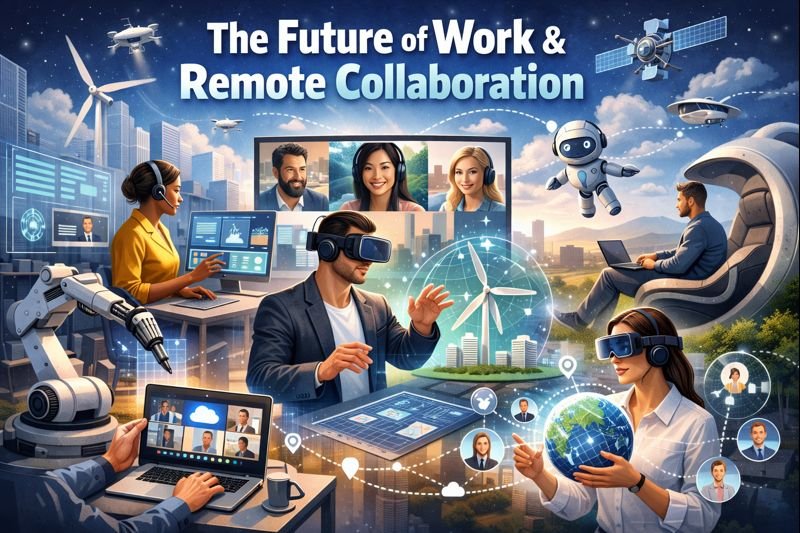
The Future of Work and Remote Collaboration
The workforce continues to change. Organizations are utilizing technology to facilitate hybrid and remote work environments through improved collaboration tools.
Key Changes:
- Artificial Intelligence to Enhance Productivity
- Virtual Meeting Spaces
- Workflow on the Cloud
- Digital Employee Monitoring and Analytics.
Organizations are taking advantage of technology for improved flexibility, efficiency, and work/life balance.
12. Ethical AI and Responsible Technology
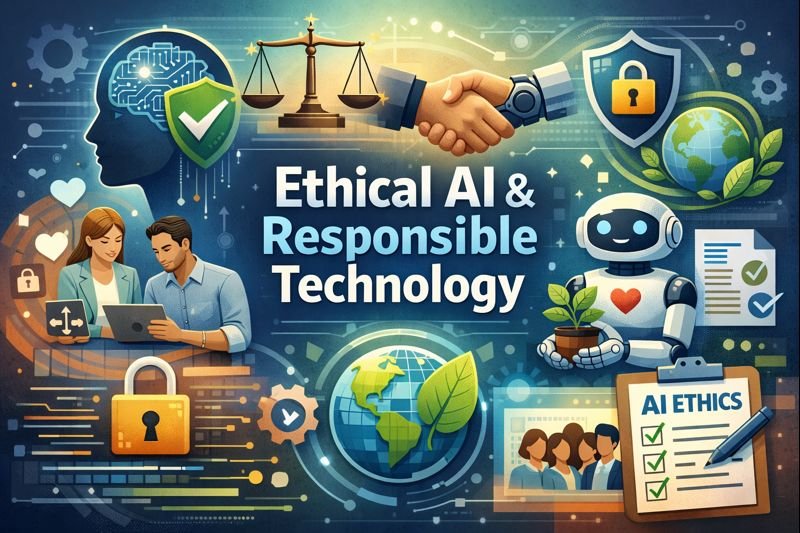
Ethical AI and Responsible Technology
As technology continues to improve, we will see an increase in Ethical considerations in Technology. Responsible Development of AI as well as Digital Ethics will be one of the primary sources for future innovations by 2025.
Focus Areas:
- Reduction of Bias in AI Models
- Transparency in Algorithms
- Protection of Data Privacy and Consent
- Compliance with Regulations
Governments & Corporations Partnering to Establish Ethical Frameworks to Ensure Technology Helps Society.
Conclusion: Preparing for a Technology-Driven Future
Emerging Technology Trends for 2025 Will Shape the Future of Technology as a Future of Intelligence, Connection, Sustainability, and Humanity. Businesses, Governments & Individuals Will Need to Prepare for the Future of Technology by:
Continually Learning, Having an Ethical Responsibility & Investing Strategically.
Those who Harness the Power of these Technologies Will be More Competitive and Those Who Do Not Will Fall Behind. As We Look Forward, it Remains Certain that Technology Will Continue to Change What Can Be Done and Who Will Lead Innovation.